November 24, 2011

I spy your little game: a poem


A friend of mine, Sanders, sent me the above piece of poetry. It was obviously published long ago, but is as relevant today as Thanksgiving (happy one by-the-way). My favorite lines are below.


~~~~~~~~~~

I've something now to tell you, and you'll own that it is true, 
We meet so many kinds of men, we scarce know who is who, 
Then of a kind advice I give, I think I'm not to blame, 
Whoever you meet. be sure, at first to see their little game.

Fol de rol, &c.

The other day, I met a man, his name, he said, was Brown, 
Says he: as you're a stranger, I will show you round the town, 
Of course, you'll stand espenses, next week I'll do the same, 
Says I: excuse me Mr. B— I spy your little game.

While at the races, lately, around I chanced to stray, 
A man, at three card-monte was shuffling away, 
Says one to me: I bet you fifty the next card you cannot name, 
Says I: sir, I'm not quite green enough, I spy your little game.

The other day, going down Broadway, at a Faro-bank I stopped, 
Where on the red and black cards the men their dollars popped; 
Says one to me: I bet a V.— now, you do just the same, 
Says I: my friend, excuse me, but I spy your little game.

~~~~~~~~~~


I received some nice comments from Facebook friends, Roger Smith and Christina Kelley Marshall today.

Roger writes,

"The more I read about Soapy the more it holds that 'truth is often stranger than fiction.' What a complex person he was. The King of the Frontier Con Artist, but at the same time the most generous man in Skagway." 
Christina writes,
"The book is awesome and you can tell a lot of work went into it. It's a great read!!"

Thank you very much Roger and Christina.


Jeff Smith


.

November 23, 2011

Bishop Rowe Hospital: Skagway, Alaska.

Early photo of the Skaguay Hospital
February 1898
Later renamed the (Bishop) Rowe Hospital
(W. L. Whitaker Collection, Alaska State Library)


The Rowe Hospital has been a footnote in the history of Soapy Smith, being the place where Frank H. Reid was taken and where he died after the shootout on Juneau Wharf where he was shot by Soapy. Besides what little information was published in The Skaguay News and The Daily Alaskan, my first education about the hospital came from Martin Itjen's book, The Story of the Tour On the Skagway, Alaska Street Car (1934) in which Martin wrote,


This was Bishop Rowe Hospital, which by the way, is the place where they took Reid when he was shot by "Soapy'' Smith. It was our hospital for a number of years, but after the people quit getting sick he had to close the place on March 31st, 1905.

The Bishop Rowe Hospital
1898-1900

The history of the once Bishop Rowe Hospital in Skagway is almost coincident with that of the town itself. The same was founded by a group of townspeople on Feb. 19th, 1898 to meet the emergency of the great epidemic of spinal meningitis which then swept the region. The largest log cabin in town — 16 by 24 was purchased with funds raised by subscription, a nurse secured. So great was the emergency that not even beds were provided, and patients were cared for lying side by side on the floor. Men died unknown and uncured for in their tents and cabins.

Primitive as the hospital arrangements were, it proved an incalculable good in that time of scourge. April 16th 1898 Bishop Rowe was asked to assume charge and ownership. They made over to him the cabin and lot on which it stood, stipulating that he should make an immediate outlay of $1000 in building. The old books show that he laid out $3000. The two story frame building on the south was added.

The ground that was once tilled by the patients, now yields gorgeous tulip poppies and luscious red raspberries, and is the home of Mrs. Stanton Yeomans.

Hospital patient Frank Reid
July 9 - July 22, 1898


From Glenda J. Choate's book, Skagway, Alaska Gold Rush Cemetery we read that the,

first hospital in Skagway opened in February 1898, when the spinal meningitis epidemic ravaged the local community. Money was raised to rent and furnish a hospital building on the corner of McBride Avenue and Ivy Street. On February 23, 1898 the Morning Alaskan reported that "the lot is 50'x100', house is 1.5 story log, 18'x24', with a cellar, stable and a large quantity of wood for $600.'' The paper also reported the following admissions to the hospital that week. Ten patients were cared for with these ailments:
1- frozen toes amputated 2 - cerebral spinal meningitis
2 - pneumonia
2 - grippe
1 - bronchitis
1 - influenza
1 - inflammation of the bowel
1 - death

In April [1898] the hospital became the Bishop Rowe Hospital, named for Episcopal Bishop Peter Trimble Rowe, its benefactor, who made frequent trips to Skagway. Women of Skagway decided the hospital needed a women's ward, and funds were soon raised for the ward. The Bishop Rowe Hospital advertised on April 15, 1899 that "its location was high and healthy, accommodations for 30 patients, clean, well ventilated, with own dispensary with full stock of medicines and three doctors on staff ."
 
Our neighbor, Skagway Folklore posted (April 6, 2010) the text of a letter dated April 15, 1898 from the Right Reverend Peter Rowe, Bishop of Alaska in which "he described the desperate situation in Skagway and the need for the hospital."
"...the people of Skaguay have been forced to start an emergency hospital. The need of it beggars description. It has relieved many cases of great distress. The people have responded to appeals to their humanity nobly. Impressed with the importance of the institution, representatives of the public have asked me to take charge of it, and I have done so. They have transferred it all into our hands.

"The emergency hospital is a low cabin 30 feet long and 18 feet wide. One room on the ground floor answers for kitchen and cots; one room above is but half-story or attic. In this room I found 12 cots, and 10 of them were occupied with men in all stages of pneumonia and meningitis. Yesterday while visiting it a young man was brought in from the summit, 18 miles, on a sled, tied on to keep him from falling off, having been dragged over rocks and through mud all that distance.

"Last night I was with a young man who died in my arms, from New Brunswick, telling me what to say to his father and mother and sisters. It was most sad, most pitiful. Sickness is ging to increase. The appeals to our humanity cannot be ignored. The sick are absolutely friendless, helpless, and without the hospital would simply die by the wayside. We have one woman nurse, two men, and a cook. Skaguay doctors are attending for little or nothing as expenses permit. We must build an addition if only of an inexpensive and temporary character.

"I am going to begin this immediately. Present accommodations are totally inadequate and unsuitable. We have assumed great responsibility."

White Pass and Yukon Railway hospital
(Probably similar to the inside of Rowe Hospital)


It is known that Soapy was one of the first contributors to the hospital. The following is from my book (Alias Soapy Smith).

The Daily Alaskan published another subscription list, this time of those who had contributed to the community hospital site and building that had been purchased from Packer Joe Brooks. “Jeff R. Smith” was fourth from the top with a $25 donation. Previously, when the Union Church adopted the idea, as reported in Sinclair’s Mission: Klondike, “a board of three trustees was named with Reverend R. M. Dickey as chairman.” A committee was formed to canvass Skaguay for contributions, and one night as canvassing lists were being reviewed, Dickey’s Gold Fever narrator, Quebec, tells of coming “to one entry that read, “Jefferson Smith $25.” The person who collected that donation said,

“…I was passing Jeff’s place, and he came to the sidewalk and said, ‘I understand you’re collecting money to build a hospital. That’s something any of us may need sometime—I’d like to help.’ And he handed me $25.”

After a debate about not accepting tainted money, Rev. Dickey (named “Dominie” in Gold Fever) said, “If Soapy wants to contribute to a good cause, we have no right to prevent him.” When asked what was thought “of the stories being circulated about Soapy’s benevolences,” Dickey replied, “I believe some of them are true….”

Soapy's involvement with the hospital did not end there, again from my book:

Dr. W. T. Barrett wrote of his having observed Jeff look after some of his men when they were afflicted by disease.

I met Soapy Smith many times during our ten days stay in and near Skagway through D. Moore, a resident physician who was attending dozens of cerebrospinal meningitis cases, many of whom were associated with Soapy in gouging the public. Soapy often accompanied us on our daily rounds and seemed rather a delightful fellow to meet, one that would pass in any ordinary community as a successful business man—mild mannered and much interested in the humanities. His record, however, as an outlaw leader was well known to both American and Canadian authorities.


Sept. 16, 2009


Bishop Rowe Hospital: page 537.


~~~~~~~~~~~~~~~~~~~~~~~~~~
ADDITIONAL NEWS!
 ~~~~~~~~~~~~~~~~~~~~~~~~~~

Our friends over at Rocky Mountain Profiles have some photographs of how Sunrise, Alaska looks today. Hope is one of the camps Soapy visited on his first trip to Alaska in 1896. A diary notation confirms that he swindled miners with the prize package soap sell racket.


Jeff Smith


.

November 20, 2011

Jeff Smith's Parlor study: Klondike Gold Rush National Historic Park: Part 9.

Newspaper ad for Soapy Smith's saloon
Skagway, Alaska
Daily Alaskan July 2, 1898


The PDF version of the Klondike Gold Rush National Historic Park study of Jeff Smith's Parlor has been released. I was lucky enough to have received a hard copy but below you can now view the full study. I found it very interesting!

Back in the 1980s I made business card size copies of the Jeff Smith's Parlor ad (see photo at top). Purchasers of my book that asked for my to autograph the book received one of the cards. It's not meant as a reward for asking for an autograph, but merely the fact that my publisher does not have the cards, I do.


Palor Museum Hsr


NOVEMBER 20
1892:  “Chief” Soapy presents his fraternity, the Improved Order of Red Men with a war bonnet that came directly off the battlefield of Wounded Knee.


~~~~~~~~~~
ADDITIONAL NEWS!

Our friends over at Rocky Mountain Profiles have some photographs of how Hope, Alaska looks today. Hope is one of the camps Soapy visited on his first trip to Alaska in 1896. A diary notation confirms that he swindled miners with the prize package soap sell racket.

~~~~~~~~~~


Jeff Smith


.

November 19, 2011

Soapy Smith and the World's Industrial & Cotton Centennial Exposition, 1884-85

(source: nola.com)


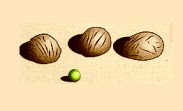
In my book there is a newspaper writeup in which Soapy Smith states he and some of his men attended the 1884-85 World's Industrial and Cotton Centennial Exposition in New Orleans, Louisiana. Investigating the massive size and constant incoming and outgoing traffic via the railroad and steamship it is a sure-thing he and his gang plucked easy cash from the crowds with various short cons such as three-card monte or the shell and pea racket. It's even possible he auctioned off his infamous cash laden prize soap.

The following comes from my book.

Jeff's name was absent from the Denver newspapers for much of 1884 and for the first five months of 1885. He seems to have kept an extremely low profile as he established himself in the city. During this period, he might still have been traveling, and one trip might have led to a stay of many months. Eight years later, in 1893, the Rocky Mountain News published an uncharacteristically humorous story about Jeff, said to have been told by Jeff himself. The setting is among men aboard a train returning to Denver. Called upon for a story, Jeff told one that occurred on his return from the New Orleans World’s Industrial and Cotton Centennial Exposition, which ran from December 16, 1884, to June 2, 1885.

SOAPY SMITH’S STORY
How His Eyes Were Blinded and How He Was Fooled.

The crowd of “sports” … found perennially partaking of the lavish hospitality of Col. Jefferson R. Smith, better known as “Soapy” Smith, the prince of bunco men, had drifted around to the prevalent bank hold-ups and railroad robberies as a topic of conversation. The party had been entertained with numerous blood-curdling tales of the James and Dalton gangs, interlarded with invitations from Jeff to “have something, boys.” And a lull that succeeded one of the libations was broken by a suggestion that their host had not contributed to the fund of stories. Now, if there is one thing more than another that is characteristic of the Hon. Jefferson, it is his extreme modesty as to himself and his exploits. He blushingly announced that what he knew about robberies and desperadoes wouldn’t hold a candle to the thrilling tales that had just been told, but he was finally induced to impose a severe strain upon his memory, and so began:

“It was several years ago—yes, Ed, before I discovered the ‘petrified man’ at Creede. Don’t interrupt me, or you’ll make me forget. As I was saying, it was several years ago, during the world’s fair at New Orleans. I had been down to take in the sights of the Mardi Gras festival. No, Ed, I said ‘take in the sights.’ I wasn’t there on business, Shut up!

(source:  specialcollections.tulane.edu)

“Well, as I was about to remark before you inserted your insinuation, I was on my way back to Memphis after the festival was over. We had passed Little Rock and as I was feeling restless, I had been walking up and down the length of the train, from the smoker to the rear Pullman.

At the first station out of Little Rock I noticed a suspicious looking fellow board the train. At the next station another got on, and when the train station was reached and a third man mounted the car steps, my suspicions were aroused. You know I have quite a reputation as an amateur detective, and this conjunction of the planets incited my sleuthing propensities. I kept my eye on the trio and before long they got together in the smoker and began to hold a whispered conversation. I started to walk up the aisle past them to get a drink of water. Yes, sometimes, when I can’t get anything else. Well, you know I am no sort of a hand to dress up and I looked rather rough in my slouch hat and high boots that day. I looked hard at them as I passed and I noticed that my glance had the effect of disturbing them considerably. I had on a big silver Mardi Gras badge, partially hidden by my coat, and I suppose they caught sight of that and the hump where my gun stuck out of my pocket and took me for a town marshal or a local officer of some kind.

“I went on up the aisle and was filling the cup at the water cooler when one of the trio got up and came forward. The car was nearly empty and I didn’t know but he might attempt violence. But he held out his hand and said, ‘How-d’ye do, friend.’ I was surprised, but I shook hands with him, just to be polite, and was about to tell him he had the advantage of me, when he turned and walked back to his seat without a word.

“When I had recovered from the mild surprise that his behavior had occasioned I felt something crumpled up in the hand he had shaken, and upon looking I found it to be a crisp $100 note. ‘Great Scott! What’s this?’ I thought. ‘These fellows have been up to some mischief and think they can bribe me not to blow on them.’ I happened to have a couple of thousand with me of course. If I’d been dead broke no one would have come near me.
“Did I get off at the next station and telegraph the police? No, you bet I didn’t. I dropped into the nearest seat and spread my handkerchief over my face and the next thing I knew it was morning, and we were putting into Memphis.

“As I walked up the street the news boys were crying ‘All about the big robbery,’ and I bought a paper to see what it was. When I had read about ten lines I hired that boy to kick me … round the city hall park, and then I went down to the Zoological gardens and let the monkeys make faces at me the rest of the day. Three men had broken into the court house of a county back in Mississippi and robbed the safe of the county treasurer of $12,000 in notes and coin! They had been followed to the nearest railroad, where they took the night train and that was the last seen of them. Twelve thousand dollars! And I was tickled over that measly little hundred. If I had only known—”

But here “Soapy” became entangled in his reflections and nobody thought it best to disturb him.

The Cotton Exposition was an event Soapy and bunco men in general yearned for. We know that Soapy purchased "fair lists" while nomading around the west swindling the unwary. Fairs were one thing but an exposition of this size was the golden goose, not to be passed up. Although it is most probable that Soapy did attend and operate at the event, there is no provenance other than his own word. The newspapers of New Orleans only mention a bunco gang problem a full two months before opening day.


Cleaning up the city before the exposition
The Louisiana Democrat
October 14, 1884


Soapy was certainly not the only confidence man to operate at the exposition. Crime related to the event started on the streets once visitors disembarked from the trains and boats, but it did not stop there. Even the organizers and city officials took advantage of the situation. The fair was plagued with corruption and scandals. Even the state treasurer saw the opportunity to run off with almost two million dollars of state money including most of the fair's budget.


Birds-eye view of the
World's Industrial and Cotton Centennial Exposition
(source: nutrias.org)


When he arrived at the exposition is not known. Opening day was December 16, 1884 but where Soapy was is not certain because he was still in his nomad stage. From artifacts in the family collection we know he purchased a vendors license in Del Norte, Colorado on September 13, 1884 but that appears to be the last record I have dating before December 16. He possibly attended the event at the time it opened but he definitely did not stay there in New Orleans the whole time as newspapers in Denver relate his arrest on May 12, 1885, and again on May 22. It is very possible he could have returned to New Orleans and stayed until "after the festival was over" (June 2, 1885) as he stated, then returning to Denver where on June 23 his peddler's license was rescinded by the Denver city council.

Tulane University in New Orleans has a large collection of exposition artifacts. They made the YouTube video below about the remains. Interesting to note is that Tulane University has a connection with Soapy. One of his grand-uncles, Anthony Peniston, a physician was a co-founder of the School of Medicine in New Orleans, which later became the Tulane University. His portrait hangs in Founders Hall, and Peniston Street in New Orleans is named in his honor. (Click here for more information)


Soapy's story included a fanciful meeting with some safe robbers, in which, “Three men had broken into the court house of a county back in Mississippi and robbed the safe of the county treasurer of $12,000 in notes and coin!”

I used the Library of Congress to search newspapers for any robberies that fit Soapy's description. I found not a single robbery in Mississippi remotely resembling a robbery of that nature between 1884-1885. I found similar robberies though.
  • February 14, 1885 (Galveston, Texas): The county treasurer's safe was robbed by two masked men of $1,000 in cash and $22,000 in State securities.
  • June 3, 1885 (Kandiyohi County, New Mexico): Treasurer's safe robbed of $7,000 cash


Sources:
Wikipedia: World Cotton Centennial.


World's Industrial and Cotton Centennial Exposition: page 93-94.


Jeff Smith


.

November 18, 2011

1908 Denver map: TIVOLI

DENVER 1908
17th Street by the Union Station train depot
(Red circle shows Tivoli Hotel)


One of the pages I watch on Facebook is Visit Denver. Recently they posted a very large map of Denver in 1908. I zoomed into 17th Street and Market and found a hotel named TIVOLI (see map above). At first glance it crossed my mind that this could be an older map section that was not updated and that the "Tivoli" was Soapy Smith's Tivoli Club saloon and gaming house, or that who ever took over the Tivoli saloon kept the name and that it continued to operate. Upon closer inspection of the map I could see that the south section of the building (Deutsch's building(?)) that held the Tivoli Club had been altered or rebuilt. I believe that most of the original building had been torn down except for the portion containing the hotel in 1908. At least the unique window configuration appears to be the same.

Although the map is dated 1908 many of the old buildings and businesses that Soapy knew, still existed so the map is a great aid.


Soapy Smith's Tivoli Club
The Deutsch building
(Left side of photograph)
Jeff Smith Collection


Full 1908 map


Tivoli Club: Feb. 28, 2011, Aug. 11, 2009, July 23, 2009,  June 4, 2009, Dec. 9, 2008. 


Tivoli Club: pages 79-81, 89, 120, 124-29, 131-32, 138-39, 171-72, 176, 182-83, 185, 188, 190, 197, 247-48, 256-57, 260-64, 272-78, 283-84, 286-87, 324, 336, 338, 352, 358, 389, 420.


NOVEMBER 18

1887: Soapy acts as timekeeper during a boxing match 18-miles outside of Denver.


Jeff Smith


.

November 17, 2011

The term "Cheap John."

Colorado Governor Waite as a "cheap John"
Rocky Mountain News
January 7, 1894


In Alias Soapy Smith I talk about Soapy Smith starting out, just previous to entering the bunco world, as a "cheap John." This information comes from his cousin Edwin Smith who stated that on a bad day Soapy was netting $20 to $25 a day, which in 1877 was equivalent to making $568 to $710 a day in today's market.

This was the first time I had ever heard the term and at the time I had no luck finding another example except for the above political cartoon on the front page of the Rocky Mountain News. I just now Google the term and found an article in the New York Times (October 29, 1871) about some particular cheap Johns in the Bowery but the author was ignorant of the methods used by the men, in that it's not like a normal salesman pitch. The following is from my book.

A cheap John operation is the predecessor of the jam auction, which Jeff would later operate in Denver. An operator sells, usually under high pressure, practically worthless merchandise at a fraction of its value in order to excite and confuse the audience. Sometimes the items are said to be valuable manufacturers’ promotional items. First, small, practically worthless items are given away to everyone, then unexpectedly slightly more valuable items are sold to bidders for almost nothing. The procedure is conducted in a way that confuses buyers about whether they are putting up money "as a good faith gesture" that they will get back or whether they are tendering payment. When buyers are thoroughly confused, the cheap John adds the final wrinkle: the sale of almost worthless (but apparently valuable) merchandise for what seem like outrageous "bargain" prices.

The political cartoon above shows radical Populist Party Colorado Governor Davis "Bloody Bridles" Waite as a cheap John in 1894 before the infamous Denver City Hall War. The cartoon refers to Waite's plan to have gold dollars made in Mexico for a new currency. Denver's city officials and Republican party leaders are making up the crowd in which Waite is trying to sell his plans to.


 ~~~~~~~~~~
 
ADDITIONAL NEWS

A couple of nice comments came in from some recent book sales and I wanted to share them with you.

  • Jack Croad Carver wrote, “The more I read of your book the more he becomes my hero, lol…for a scoundrel he was great.” 
  • William R. Hunt, author of Distant Justice: Policing the Alaska Frontier (1987) and North of 53: The Wild Days of the Alaska-Yukon Mining Frontier 1870-1914 (1974), both of which I quoted in my book, wrote,  “I received Jeff Smith's bio of Soapy and enjoyed it very much, marveling at the extent of his research and ability to organize for effective presentation."

~~~~~~~~~~


March 23, 2011


Cheap John: pages 27, 29-30, 32, 36, 42-43, 58, 131, 137-38, 190.


Jeff Smith


.

November 16, 2011

The schooner Janus once belonged to bad man Soapy Smith.

Jeff. Smith's Parlor.
Probably July 4, 1898
Soapy Smith is believed to be the right of the front door and his gray colored horse, 
on the left, is being attended to by a man sitting on the boardwalk.

THIS POST HAS AN ADDENDUM


On the morning of July 8, 1898 the day Soapy Smith was killed. He purchased the Janus, a schooner from Capt. S. E. Bright. It seems pretty clear that Soapy was preparing for a possible exit from Skagway, most likely due to the brewing trouble after the robbery of John Stewart's gold poke. After Soapy's death Bright claimed that although he had given Soapy a bill of sale, he had never been paid. The Janus was returned to Bright on July 23, 1898. Below is a newspaper article sent to me by Gay Mathas. Perhaps one day I will get lucky enough to come across a photograph of the infamous schooner.


The Oregonian
August 27,1897
FITTING OUT A FISHBOAT.
___

The Little Schooner Janus to start for Alaska.

ASTORIA, Aug. 28. ― A party of 11 San Franciscans has purchased the little schooner Janus, and is fitting her out for a trip to Alaska. The adventurers expect to start within a few days. Some of the party will sale from here on the little vessel, but the majority will go on board of her at Port Townsend. The Janus will be taken as far as Dyea and there sold. E. C. Merwin will have charge. The Janus is but little larger than a fishboat, and the trip will be an extremely hazardous one.


The Janus: pages 530, 545.


Jeff Smith


.

November 12, 2011

The Devil's Grin: A review

The Devil's Grin
by artist Randy Steffen


At least regarding Soapy Smith these older old west magazine articles I am posting need to be considered historical novels, based on a true story. Most of the writers are not historians seeking the truth. Many of them take great literary license to the point of inventing names and events. I began this campaign with the idea of correcting the mistakes in the articles but found myself writing the same thing over and again, such as the fact that Soapy was never a cowboy, etc. So I decided just to publish the articles and let you, the reader, enjoy them knowing they cannot be used for non-fiction reference or source. I hope you enjoy this one as much as I enjoy bringing them to you!

Once again I thank my good friend Bob "Buckshot" Bradley for finding these old articles and putting them on pdf format so that you can view them as they were original published. This one is entitled Devil's Grin and was published in Old West magazine in the spring of 1966. The magazine sold in stores for .50 cents.


Devils Grin


TRIVIA
This same magazine issue contains another Soapy Smith article entitled, They Stole the Parson's Pants, regarding the incident in Creede, Colorado 1892 when Rev. Thomas Uzzell was robbed of his wallet and pants while he slept. The Rev. was a friend of Soapy's in Denver, at least until Gambling was shut down with Uzzell's help. Soapy is the one who gave Uzzell the amount he had lost. Some time later in Denver Rev. Uzzell mysteriously had his wallet returned to him.  


__________

 ADDITIONAL NEWS!

My good friend, James Wright attended the Texas Gun Collectors Association show in Fort Worth and saw for sale a strongbox filled with original news articles dealing with Soapy, that was supposed to have once belonged to Soapy. Unfortunately, James misplaced the seller's business card. The man also had a copy of the 1907 booklet, The Soapy Smith Tragedy, but other than that there was no provenance.

If anyone knows this dealer I would love to contact him or have him contact me.

__________


Jeff Smith


.

November 2, 2011

Happy Birthday Soapy Smith


From my book.

Jefferson Randolph and Emily [Soapy's father and mother] moved in with Ira [Soapy's grandfather] at Shoal Creek to help care for Ira’s ailing wife, Ellen. Another Ellen, the daughter of Columbus Darwin Smith and the granddaughter of Ira, named Ellen Smith Faver, also moved to Shoal Creek. She came after her mother, Nancy Edmundson, died on October 21, 1860. Two days later Ira’s wife Ellen also died. In a letter, Ellen Faver Smith writes that ten days later, on November 2, 1860, Jefferson Randolph Smith II was born.

So much pain mixed in with the joy.

Jefferson and Emily had five children, of whom four survived. They were Jefferson Randolph, Eva Katherine, Emmie Lou, and Bascomb. Ellen Faver, who lived at the plantation until after the Civil War, came to know the first-born child and had good to say of him as a youngster: “I can truly say that a brighter more manly little boy, I have never known.” This good opinion did not last. Jefferson Randolph Smith II was to become infamously known by the moniker of “Soapy.” Jeff’s future exploits brought so much shame and disgrace to his kin in Coweta County that his name was erased from birth records in the family bible. The eraser marks can be faintly seen to this day.


Jeff Smith


.
November 1, 2011

The Soap Game: Fools of Fortune by John P. Quinn, 1890

Soapy Smith performing
the prize package soap sell racket
From Soapy by Mike Miller


For your enjoyment and education today is the general operation of the prize package soap sell racket from the book, Fools of Fortune, by John Philip Quinn 1890.

THE "SOAP GAME."

This is a trick of confidence operators which often proves exceedingly successful in extracting money from the pockets of men who consider themselves fairly well versed in the knowledge of the world. The outfit is very simple, and by no means expensive. A number of small cakes of soap of no particular value are procured, or sometimes soap is bought in bars, which are cut into pieces of the desired size. A quantity of cheap pasteboard boxes, each having a drawer somewhat larger than is the piece of soap which it is to contain, are procured and soap placed inside of them. In order to work the game, a room-usually one opening off the street-is rented. The "soap man" takes his position on a raised platform, and when a crowd has gathered to see what is going on he takes out a cake of cleansing soap, i.e., a preparation for removing grease and similar substances from cloth. He proceeds to expatiate upon its merits, illustrating his remarks by experimental demonstration. If he is a good talker, and intersperses his remarks with a few interesting anecdotes, he succeeds in attracting and keeping the interest of his audience. When he has proceeded far enough in his remarks he informs his listeners that the manufacturers of this wonderful preparation are seeking to intro- duce it in a somewhat novel way; that they propose to place a given amount of currency in a certain number of boxes together with a cake of soap in each. These boxes, he says, will be thoroughly mixed and every purchaser will be allowed to select any three boxes (the price of which will be $1.00) from the entire number offered. To prove his sincerity and truthfulness he draws from his pocket several bills, of denominations ranging from $1.00 to $20.00, and announces that he will place them inside the boxes in the presence of the crowd. He takes the bills in his hand, one at a time, folds them up carefully, and apparently inserts them in the boxes. Each box, after the bank note has been placed in it, is dropped into a large leather satchel. When he has disposed of all the bills, he takes the satchel in both hands and shakes it, with a view to thoroughly mixing the boxes. He then opens it and offers to allow any one present to select three boxes on the payment of one dollar. It is the easiest thing in the world to sell the soap, but no legitimate purchaser ever succeeds in obtaining more than a single dollar bill. The reason is that the vendor adroitly "palms" off the bills of larger denominations, substituting therefor dollar bills which he has previously rolled up and which he holds in his hand at the time that he apparently inserts the large bills into the boxes in the presence of the spectators. In other words, when the boxes have been dropped into the satchel and mixed none of them contain a note of a larger denomination than one dollar, the confidence man having still in his possession all of the large bills. When it is remembered that not more than one box in ten contains any money whatever, the chances of drawing a prize are readily seen to be exceedingly small. The buyers, however, believe that they have seen the large bills placed in the boxes before their eyes, and part with their money very readily. It may be easily seen that "cappers" are almost indispensable in this as in so many other confidence games. It is not necessary that any signal should pass between the confederates. The "capper" usually places his three boxes in his pocket as soon as he has purchased them. Someone in the crowd is always certain to ask him to open them. At first he objects, but finally yields to persuasion. He takes out three boxes from his pocket and one of them is always found to contain a large bill. The explanation of his apparent good luck is very simple. When he puts the three boxes in his pocket he had there another one, precisely similar in size and appearance, containing the bank note which he exhibits to the crowd. When he drew three boxes from his pocket, he took the one which he previously placed there together with two of those which he had taken from the bag.


Tom Biss as Soapy Smith
Skagway, Alaska
circa 1970s


Prize package soap sell swindle: pages 8, 15, 37-39, 41, 43, 45-56, 48, 51, 55-56, 58, 75, 95-97, 106, 119-120, 149, 159, 163, 410, 464, 485.


Jeff Smith


.